

Description
Cryptolaemus (Cryptolaemus montrouzieri) are Australian native ladybird beetles. They are very efficient predators of many species of mealybug and soft scale insects. Cryptolaemus are recognised worldwide as effective biocontrol agents of these pests and they have been exported to many other countries.
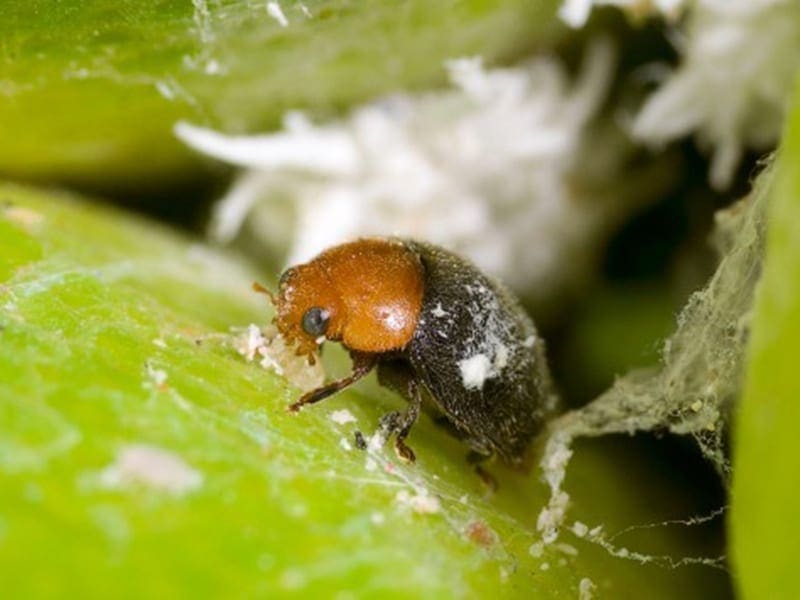
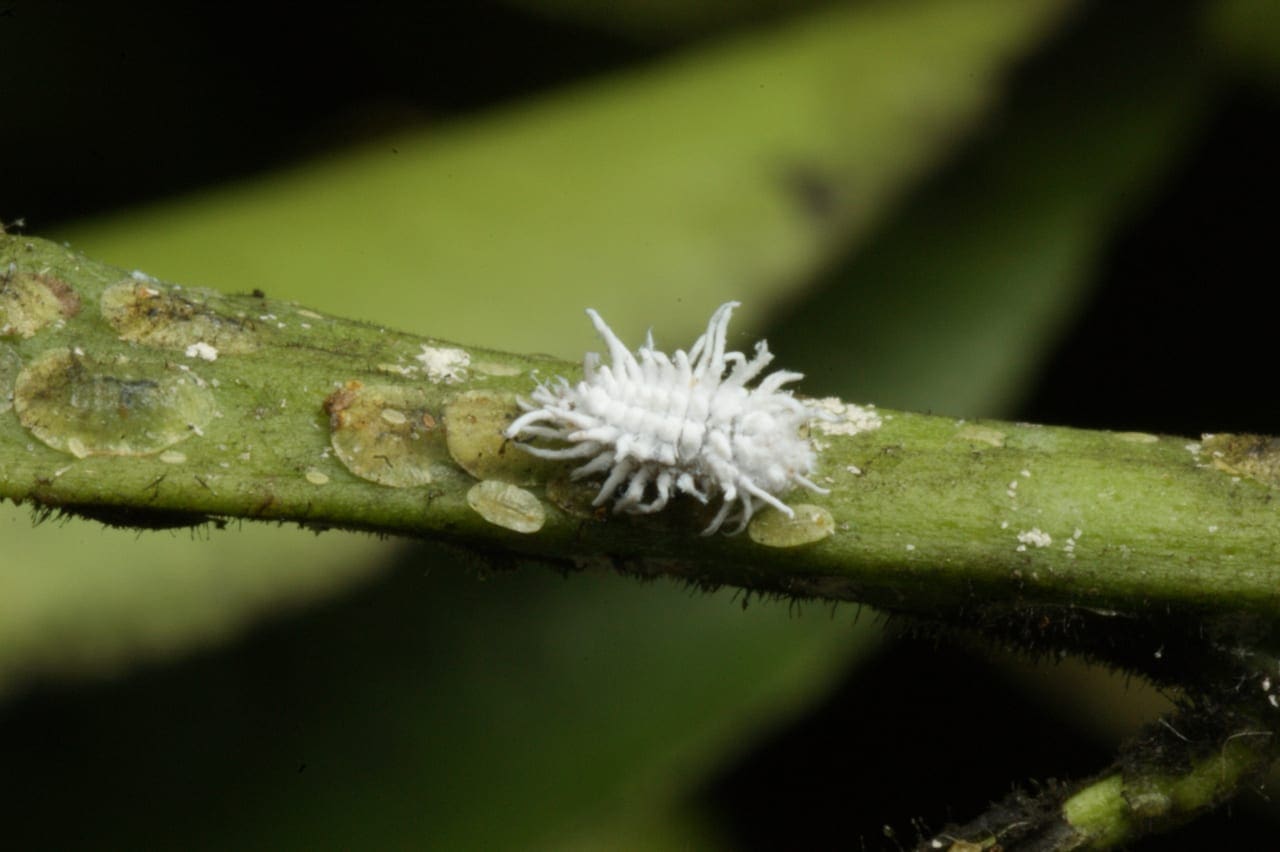
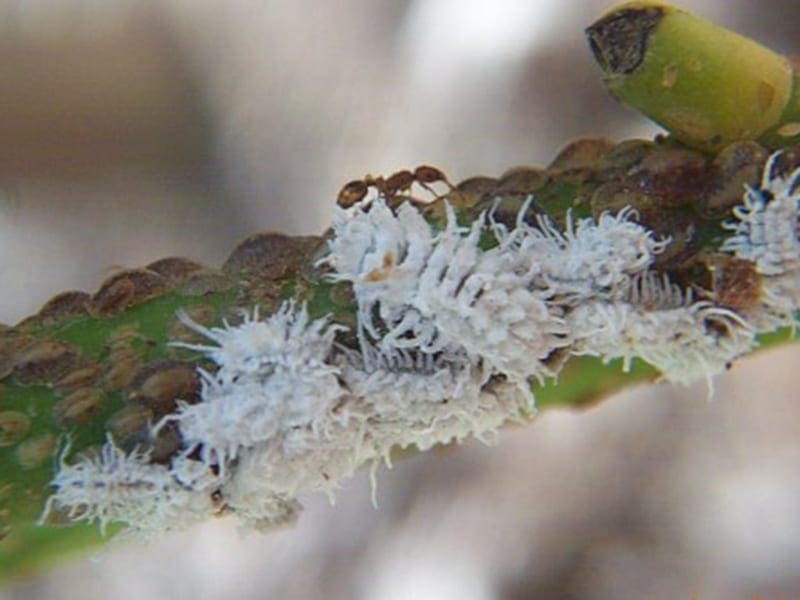
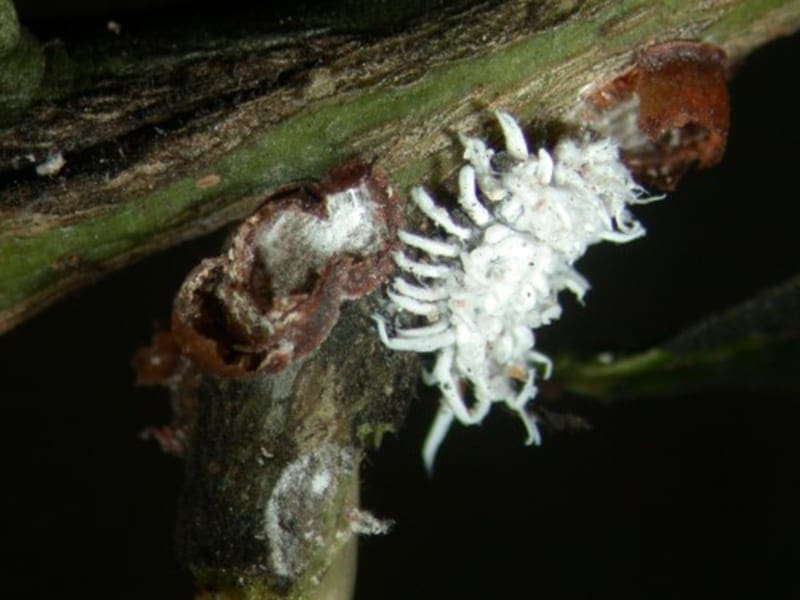
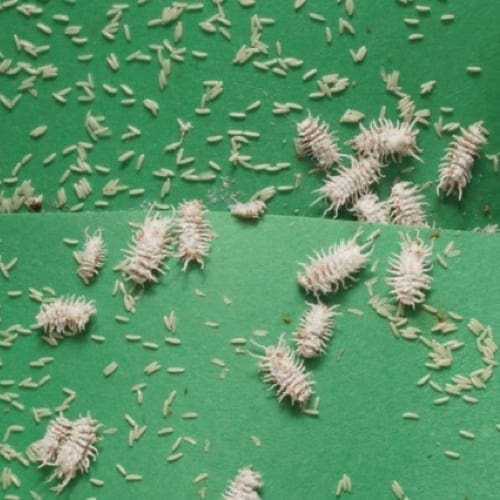
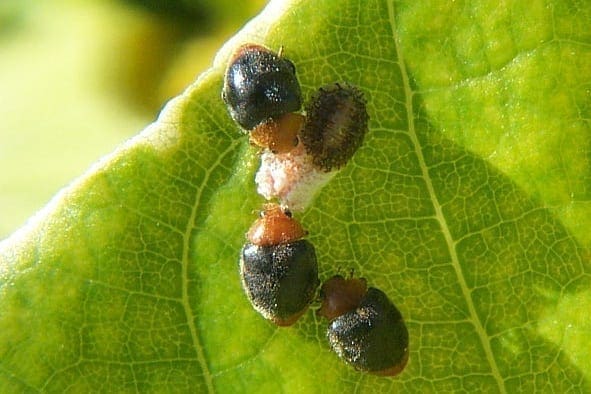
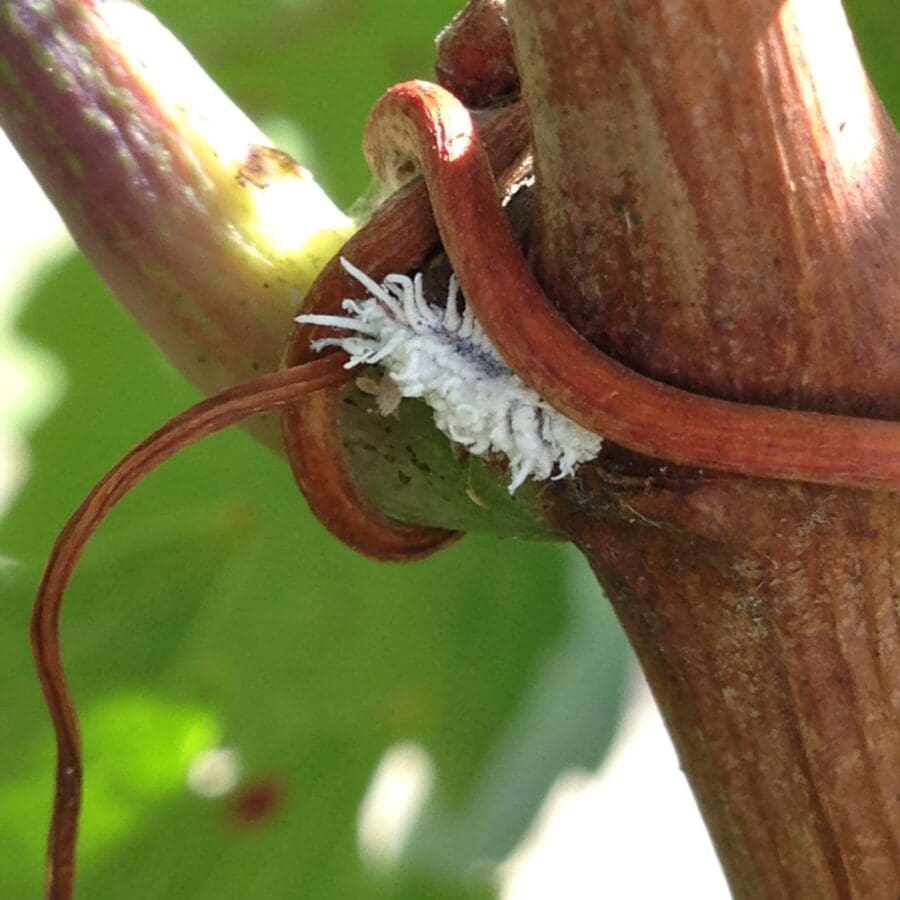
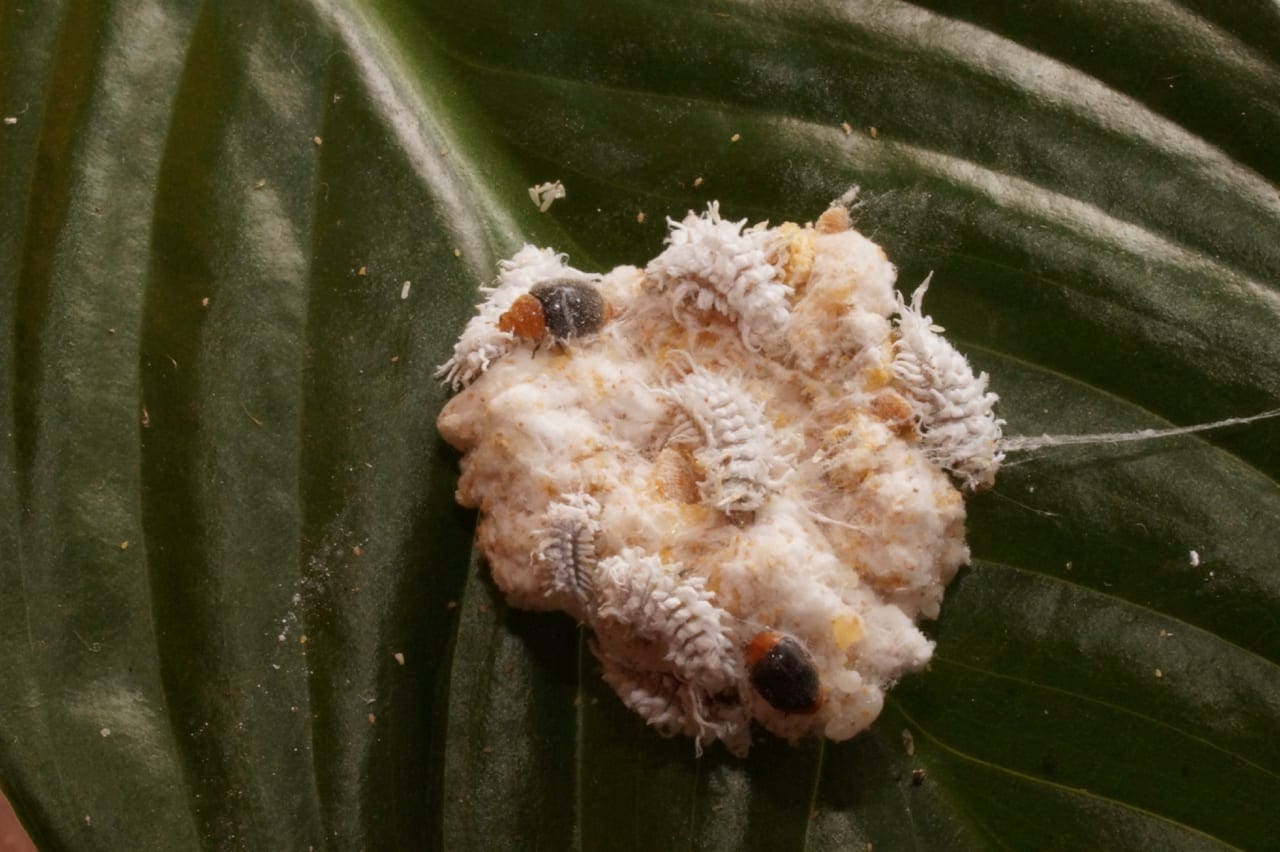
Adult beetles are about 4 mm long with an orange head and black wing covers. The larvae grow to 13 mm and are covered in waxy filaments. The larvae look very much like mealybugs and are often confused with them. Adult female beetles lay up to 10 eggs per day (up to 500 in total) directly into mealybug egg masses. Adult beetles and larvae feed on mealybug eggs and young stages. Large Cryptolaemus larvae can also consume adult mealybugs. The life cycle takes 4-7 weeks depending on temperature.
Download our Cryptolaemus tech sheet
Target pests
- Citrus mealybug
- Obscure mealybug
- Citrophilus mealybug
- Black scale
- Pulvinaria scale
- Cottony cushion scale
Advantages
- Feed on all stages of mealybug and soft scales
- They consume 30-70 prey per day
- Adult beetles are strong fliers, capable of searching for target pests
- Larvae are ideal for rapid treatment of pest hotspots
Suitable crop environments
Cryptolaemus can be used in a range of crops and environments. They work well in field crops, orchards, glasshouses and indoor atria. They are active at temperatures of 16-33°C but perform best around 25-28°C. Adult beetles are most active in sunny weather. Like most beneficial insects, Cryptolaemus prefer environments protected from dust and extremes of heat and low humidity.
Release rates
Release rates will vary depending on the crop and level of infestation. The table below is only a guide – contact us for specific recommendations.
| Situation | Release rate (per release) | No. of releases | Interval between releases |
| Protected crops | 1-5 beetles/10 m2 | 2-3 | 3-6 weeks |
| Orchards / field crops | Min. 1,000 beetles/ha | as required | 2-3 weeks |
| Hotspot treatment | 10-50 larvae/m2 | as required | 1-2 weeks |
Unlike chemicals, when it comes to beneficials, more is always better. However, they are costly to produce and our goal is to achieve the best results at minimal expense. There are many factors to consider, including the value of the crop, the severity of the pest outbreak and the activity (or otherwise) of naturally occurring beneficial species.
As a general rule, 2-3 releases of modest numbers is better than a single large release. This reduces risk, improves establishment and accelerates the development of multiple overlapping generations. In most cases our releases are inoculative and we anticipate that our beneficials will establish and breed up within the crop to give long term control.
When to release
Cryptolaemus should ideally be introduced at the first sign of pest activity. In orchard and field crops it is particularly important to get Cryptolaemus established before the pest population builds up to high and damaging levels. In indoor or nursery environments they are best released regularly whenever mealybugs or soft scale insects are present. Cryptolaemus and Green Lacewings work well together.
How to release
Before release, check prior history of chemical applications to ensure toxic residues are no longer present. See notes on chemical use below.
Cryptolaemus larvae are despatched on strips of paper covered with fly eggs for them to feed on during transit. On arrival, theses strips of paper can be placed directly onto plant foliage near target pest infestations. Any larvae remaining in the tube should be tapped out onto plant foliage.
Adult beetles are supplied with honey or glucose syrup as a food source during transit. On arrival, they should be tapped out of their container onto plant foliage near target pest infestations.
In the event of adverse weather such as extreme heat or high rainfall, Cryptolaemus may be stored for a couple of days in a dark room at about 10-18°C. Tubes of larvae should be stored on their side. Adult beetles should be supplied extra honey (under the lids) during storage.
After release
Adult beetles will rapidly disperse and begin feeding and laying eggs when they find prey. Do not expect to see adult beetles readily after release. It may be up to two weeks before their offspring can be observed feeding on pests.
Larvae should commence feeding immediately after release. It will take around 2 weeks for them to complete their development (at 25°C). They will then pupate and adult beetles will emerge to continue the cycle.
Regular monitoring is recommended following release to check that Cryptolaemus have established. The larvae look similar to mealybugs, so care should be taken not to confuse the two.
Significant control is possible within one generation of Cryptolaemus. However, high pest populations may take longer and top-up releases may be required.
Cultural practices to aid establishment
- Ants are often associated with mealybug and scale infestations. Ants actively defend these pests from their natural enemies. Controlling or reducing ant numbers can improve the efficacy of biocontrol agents that target mealybugs and scale insects. See our ant control blog for further information.
- When releasing adult ladybird beetles, we recommend the use of sleeve cages to monitor and aid in the establishment of a local breeding population. You can purchase our ‘beetle bags’ or make your own sleeve cages.
- Practices that reduce wind and dust will help the beetles establish.
- Avoid releasing the beetles where bright lights may attract them away from the release area (e.g. in shopping centres and office blocks it is best to release them after hours).
Chemical use
Pesticide residues may slow or prevent the establishment of Cryptolaemus. Copper and nutritional sprays are generally not harmful and many miticides are also quite safe. Organophosphate, carbamate and synthetic pyrethroid insecticides are very toxic and should be avoided where possible. If these sprays are applied, a minimum of 4 weeks should elapse before Cryptolaemus are released. Prevent drift of pesticides from neighbouring areas. Some insect growth regulators (IGRs) are also harmful to predatory beetles.
If pesticides are required, always check for side-effects and select products that are least harmful to Cryptolaemus and other key beneficials in your IPM program. Consult the Koppert side effects app for information about the effects of pesticides on Cryptolaemus.
Cryptolaemus in action
This video shows cryptolaemus feeding on mealybug.
Other natural enemies of mealybug
- The parasitic wasp Leptomastix dactylopii
- The parasitic wasp Leptomastidea abnormis
- Green lacewings Mallada signata
amanda (verified owner) –
I am extremally happy with cryptolaemus on our mixed ‘tropical’ crop in our heated glasshouse, preying on mealy bug. I have been impressed with the both adult and larvae mobility, peristence, and voraciousness, in short their effectiveness in controlling an agressive outbreak of mealy. Excellent.
Anna Ferrer (verified owner) –
Excellent for soft scale insects. If buying the adult beetles, I’d strongly recommend purchasing the beetle bags as they move about rapidly. The beetle bags help them stay in one spot. Love that they’re a native ladybird and if you’re squeamish about handling the other good bugs on this website, I’d think these would be easier for you.
Keen to try these again in larva form and on mealybugs. However also glad that I don’t have this problem in my garden!
bonniezou (verified owner) –
My little garden has a terrible problem with mealy bugs. There were so many of them that I cannot solve it only with the lacewings I purchased. So I bought some of these ladybird beetles. They have been very active and started eating as soon as they arrived. I will definitely buy other biocontrol agents from this company if I need more!